Food guide
Brie
Brie is a mould-ripened soft cheese, and official guidance recommends waiting until 12 months before introducing it. Even when pasteurized, mould-ripened cheeses carry a higher risk of listeria than hard cheeses, so it's best saved for toddlerhood. When the time comes, always choose pasteurized brie.
How to serve at this age
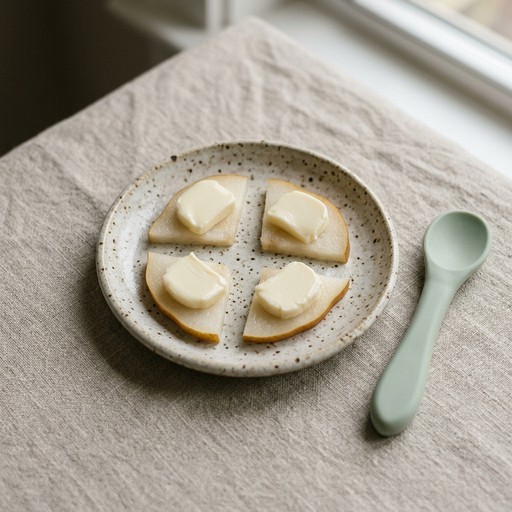
6-12 months: Not recommended. Brie is a mould-ripened soft cheese — hold off until 12 months and offer pasteurized hard cheeses like cheddar-style cheese instead. 12+ months: Small, thin strips or bite-sized pieces of pasteurized brie with the rind removed, served on its own, on toast, or mixed into soft foods. Offer occasionally as part of a varied diet.
Nutrition
Brie provides a good source of calcium for strong bones and teeth, and protein essential for growth and development. It also contains some Vitamin A and B vitamins, contributing to overall health.
A note from the editors
Wait until 12 months, choose only pasteurized brie, and always remove the rind before serving — it can be tough to chew and a potential choking hazard.
Good to know
Brie is a dairy product and a common allergen. Introduce it one at a time and watch for reactions. As a mould-ripened soft cheese it is recommended only from 12 months, and only pasteurized versions should ever be offered. Brie is also relatively salty, and babies need very little salt, so offer sparingly.