- Age
- 9 months+
- Prep
- 5 min
- Cook
- 5 min
- Difficulty
- Easy
Watch
Ingredients
- 1 medium egg
- 2 tablespoons (30 g) oat flour
- 3 tablespoons (45 g) pumpkin purée
- Neutral oil, for cooking
- 3 tablespoons plain labneh
- Optional: 1–2 teaspoons milk of your choice or water, to thin the batter
- To serve (optional): extra pumpkin purée and labneh for dipping
Method
- 01
Whisk the egg and pumpkin purée in a bowl until combined.
- 02
Add the oat flour and mix well. If the batter is too thick, add 1–2 teaspoons of milk or water to thin it out.
- 03
Lightly grease a frying pan with neutral oil and heat it over medium heat.
- 04
Pour in the batter and spread it into one thin, even pancake.
- 05
Cook for about 2 minutes, until the edges start to loosen. Flip and cook the other side until fully set and no wet batter is left.
- 06
Slide the pancake onto a board and let it cool for a minute.
- 07
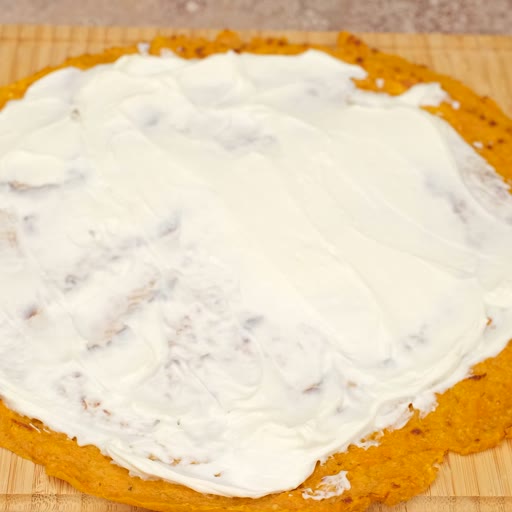
Spread the labneh evenly over the top.
- 08
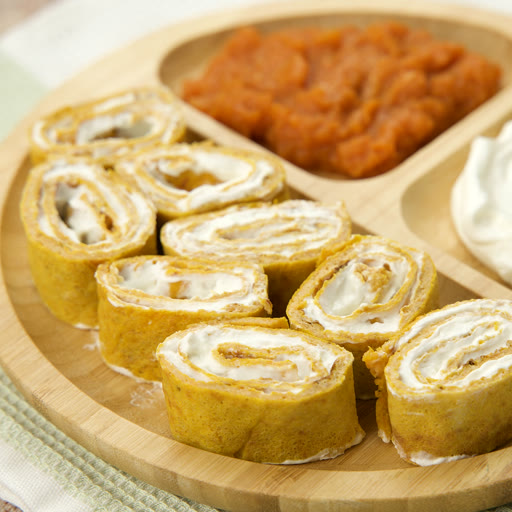
Roll it up tightly, then cut the roll in half and slice it into bite-sized rounds.
Gallery
How to offer
Makes about 10 small rounds. From 9 months, offer 2–3 rounds on the tray; they are soft and easy to pick up and squish. Make sure the pancake is cooked through with no runny egg. Choose a plain labneh with no or little added salt (or use thick plain Greek yogurt). Contains egg and milk, two common allergens. Use certified gluten-free oats if needed. Always supervise baby during mealtime.
Storage
Best eaten fresh. Keep leftovers in an airtight container in the fridge for up to 1 day and serve cool.
Nutrition note
Excellent supply of polyunsaturated fatty acids and protein (healthy fat). include selenium, zinc, and iron as well as folate, vitamins A, D, E, and K, and vitamins B and K. Choline, a vital component that affects a healthy metabolism, neurological system, and muscle action, is also found It's okay for kids to eat eggs every day. Eggs are a wholesome, adaptable food that is frequently inexpensive and readily available.
Nutrition information is general guidance, not medical advice. Read our nutrition disclaimer