Food guide
Pear Fruit
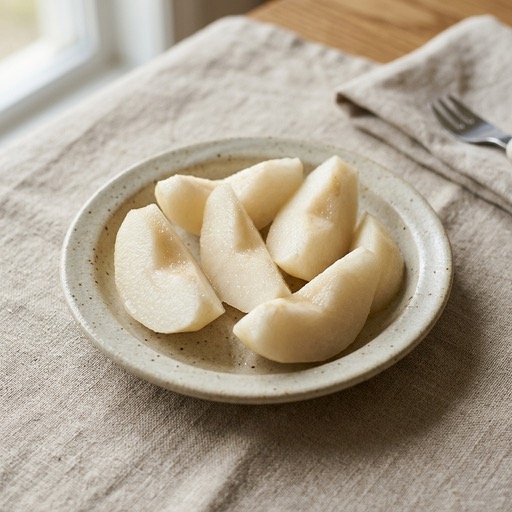
Due to how slippery and hard the fruit is, raw pears can be a choking hazard. On the other hand, pears can be introduced as soon as your baby is ready to start solids, which is often around 6 months old, if you steam or simmer them until they are mushy, or slice them very thinly.
How to serve at this age
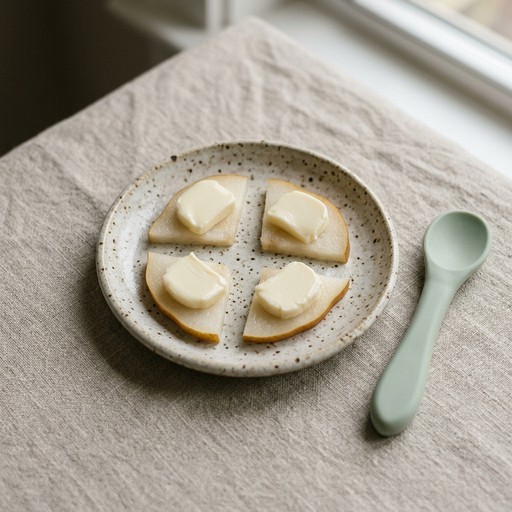
6-9 months old: Cook pear halves (core removed, skin on or off) till soft. 9-12 months old: Start offering bite-sized pieces of ripe, soft pears once the infant has grown into their pincer grasp. You can also keep cooking and serving half-pears or bite-sized portions of cooked pears in addition to continuing to provide thin slices of ripe, soft pears. 12-24 months old: At this stage, pretty much everything works for ripe, soft pears. When you think your baby is ready, present the whole fruit with the skin after quartering the fruit and removing the core and seeds.
Nutrition
The variety of vitamins and minerals found in pears includes copper, which helps the body absorb iron, vitamin C and other antioxidants, which support a strong immune system, and vitamin K. The majority of the fiber in pears, which is known to be abundant, is located in the skin.
A note from the editors
Because they can be sprayed with pesticides, choose organic pears if you can. However, a thorough washing can lessen pesticide residue if organic solutions are not accessible or affordable.
Good to know
Pear bits that are raw or dried pose a choking risk. You can simmer, steam, poach, or poach pears until they are completely soft to lessen the risk. Pear allergies are extremely uncommon.