Start here
Is your baby ready for solids? The 4 signs to look for
Watching your baby eye your dinner and wondering if they're ready for food is one of the most exciting moments of early parenthood. Figuring out the right time can feel confusing, especially when everyone has a different opinion. Here's how to look past the guesswork and read your baby's actual cues.
The four signs of readiness
Health authorities agree on four signs. Look for all four together: that is a far more reliable signal than age alone. They usually appear around 6 months, and not before 4 months.
 01
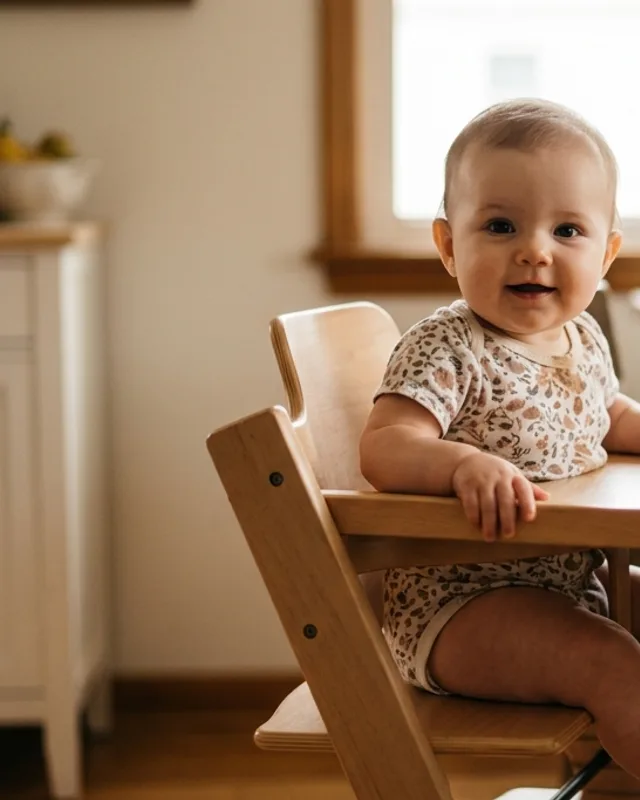
Sits up with a little support
Your baby can sit upright in a high chair or on your lap with minimal support. Stability matters: a baby who slouches or tips over is more likely to choke, because food can slide back before they're ready to swallow.
 02
Holds the head steady
Your baby holds their head up steadily without wobbling, and can turn it away to say 'no more'. Good head and neck control is non-negotiable for safe swallowing.
 03
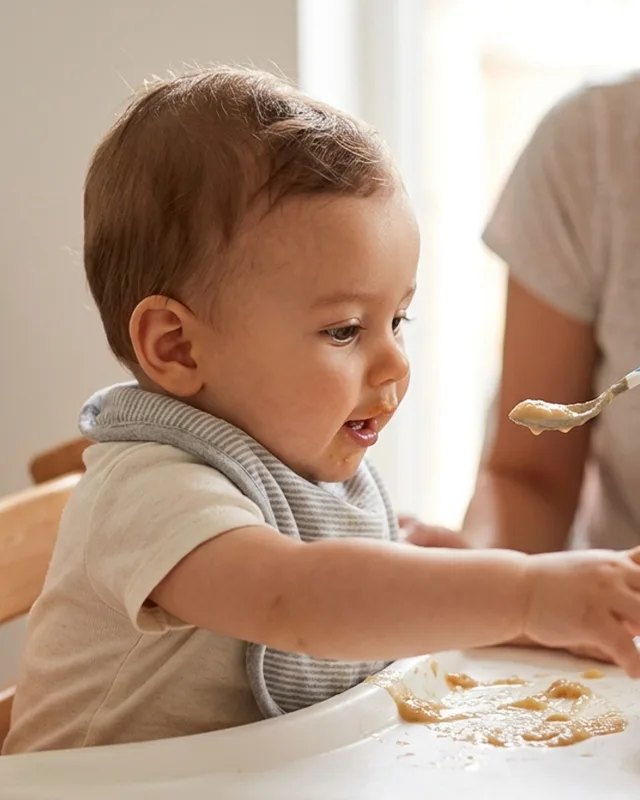
Reaches for food and watches you eat
Your baby watches you eat, reaches toward your plate, or opens their mouth when food comes near. This curiosity is one of the clearest signals, but on its own it isn't enough: babies are curious about everything.
 04
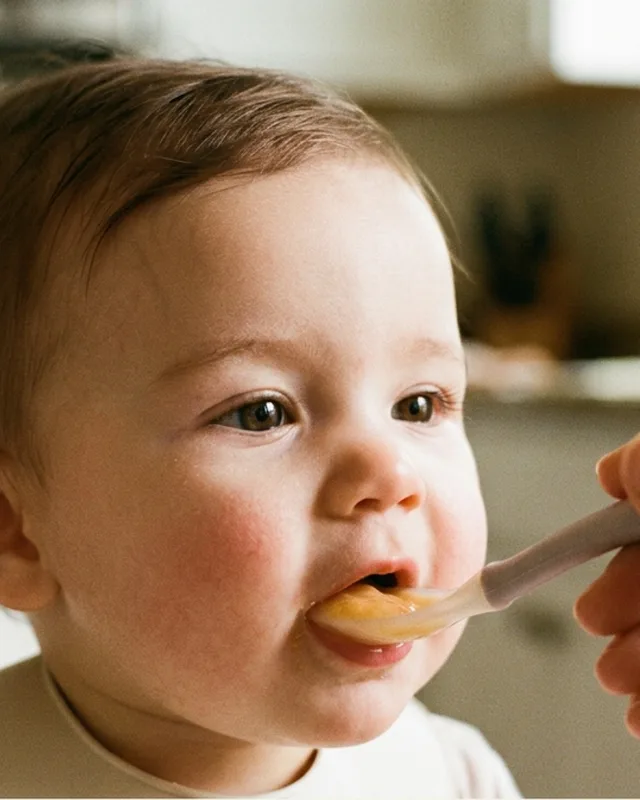
No longer pushes food out with the tongue
The tongue-thrust reflex automatically pushes anything that isn't milk out of the mouth. Once it fades, food stays in and gets swallowed. This one is easy to miss, so watch for it over a few tries.
Why 4 months is too soon
Starting solids before 17 weeks (around 4 months) is not recommended, even if your baby seems keen. Their digestive system and kidneys are still developing, and early introduction is linked to a higher risk of choking and digestive discomfort. Most babies show the readiness signs somewhere between 5 and 6 months, and many closer to 6 months. That's completely normal.
Age alone isn't the answer
Turning 6 months doesn't automatically mean your baby is ready, and being 5½ months doesn't mean they're not. A baby who sits well, holds their head up and is curious about food at 5½ months is likely more ready than a 6-month-old who still has a strong tongue-thrust reflex.
A note on premature babies
If your baby was born prematurely, look for readiness using their corrected age (the age they would be if born at 40 weeks), not their birth date. A baby born 8 weeks early might not show the signs until 6½ or 7 months actual age. Your healthcare team will tailor the timing to your baby.
When to ask your doctor
If your baby is approaching 7 months and still doesn't show the signs, talk to your GP or pediatrician. Nothing is necessarily wrong, but they can check for underlying developmental factors and give you personal guidance. If you're simply unsure whether what you're seeing counts, your health visitor has seen hundreds of babies at this stage.
Key takeaways
- Four signs together mean readiness: sitting with little support, steady head control, interest in food, and losing the tongue-thrust reflex.
- Don't start before 17 weeks (4 months), however ready your baby seems.
- The signs matter more than the date on the birth certificate.
- Premature babies are assessed by corrected age.
- Unsure, or nearly 7 months without the signs? Ask your GP or health visitor.
Sources
- NHS Start for Life – Weaning
- UNICEF UK Baby Friendly Initiative – Introducing solid foods
- CDC – Infant and Toddler Nutrition
- HealthyChildren.org (AAP) – Starting Solid Foods
This guide is general information, not medical advice. Read the nutrition disclaimer
Ready? Start here
Baby-led weaning recipes for 6-month-olds